Top Manufacturing Design Courses By Tata Technologies

Top Manufacturing Design Courses by Tata Technologies featuring manufacturing design skills, CAD software, career paths, and engineering training.
Business

Top Manufacturing Design Courses By Tata Technologies
Manufacturing design is the foundation of modern product development, ensuring that products are not only functional but also easy to manufacture, assemble, and maintain. From automobiles and aircraft to consumer electronics and industrial machinery, manufacturing design transforms engineering concepts into production-ready solutions. As Industry 4.0, automation, and smart manufacturing continue to evolve, the demand for skilled professionals is growing rapidly, making top manufacturing design courses an excellent way to build the practical skills required for today’s engineering roles.

Whether you’re an engineering student, a recent graduate, or a working professional, understanding manufacturing design can open doors to exciting career opportunities. In this guide, you’ll learn what manufacturing design is, the essential skills and processes involved, career opportunities, and how the right training can help you become industry-ready.

Table of Contents

What Is Manufacturing Design?

Manufacturing design is the engineering approach of designing products and components while considering how they will be manufactured, assembled, inspected, and maintained. 

Unlike traditional product design, where the focus is mainly on product functionality and appearance, manufacturing design focuses on creating products that are: 

🔺Easy to manufacture  

🔺Cost-effective  

🔺Reliable  

🔺Simple to assemble  

🔺Optimized for production  

Suitable for available manufacturing processes  


A manufacturing design engineer works closely with product designers, manufacturing engineers, quality teams, and production departments to ensure that the final design can be produced efficiently. 

🔺Material selection  

🔺Machining requirements  

🔺Casting or forging limitations  

🔺Sheet metal forming constraints  

🔺Assembly sequence  

🔺Manufacturing cost  

🔺Tolerance requirements  

🔺Inspection methods 


This approach is commonly known as Design for Manufacturing (DFM) and Design for Assembly (DFA). 

Why Is Manufacturing Design Important?

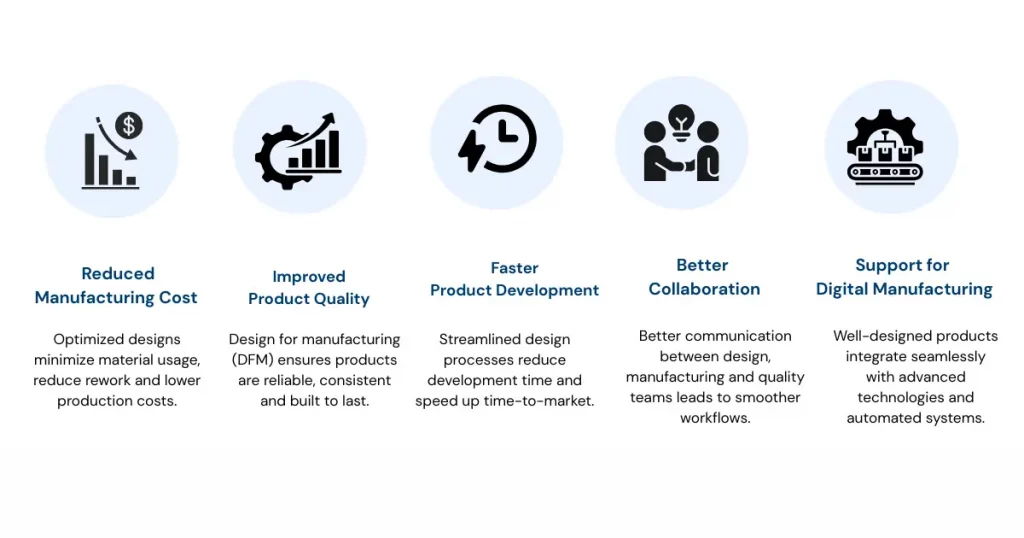
Manufacturing design plays a critical role in modern product development by ensuring products are practical to manufacture, cost-effective, and production-ready. By applying manufacturing engineering principles and Design for Manufacturing (DFM), organizations can improve quality, reduce costs, and support efficient manufacturing workflows.

Why Is Manufacturing Design Important? Infographic showing the key benefits of manufacturing design, including reduced costs, improved product quality, faster product development, better collaboration, and digital manufacturing.

These benefits make manufacturing design an essential part of modern engineering. Whether developing automotive components, aerospace systems, or consumer products, effective manufacturing design helps organizations improve production efficiency, reduce waste, enhance product quality, and accelerate the journey from concept to production.

Typical Responsibilities

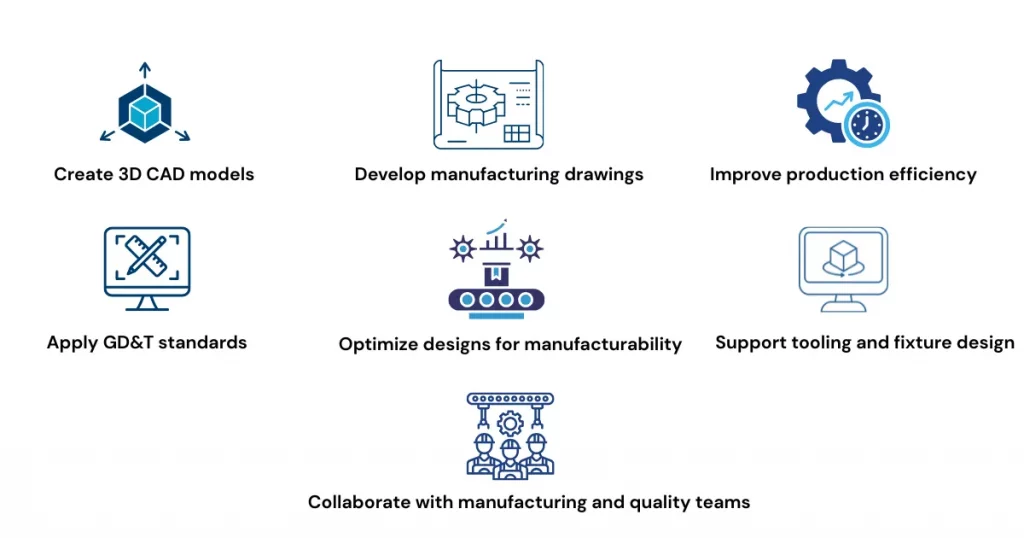
Manufacturing Design Engineers play a key role in transforming product concepts into manufacturable solutions. Their responsibilities include creating CAD models, developing engineering drawings, applying GD&T standards, optimizing designs for manufacturability (DFM), and collaborating with cross-functional teams to improve production efficiency and product quality.

If you’d like to understand how engineering drawings communicate design intent, you can also read our guide on What is GD&T and Why is it Important for Design Engineers?

How to Become a Manufacturing Design Engineer?

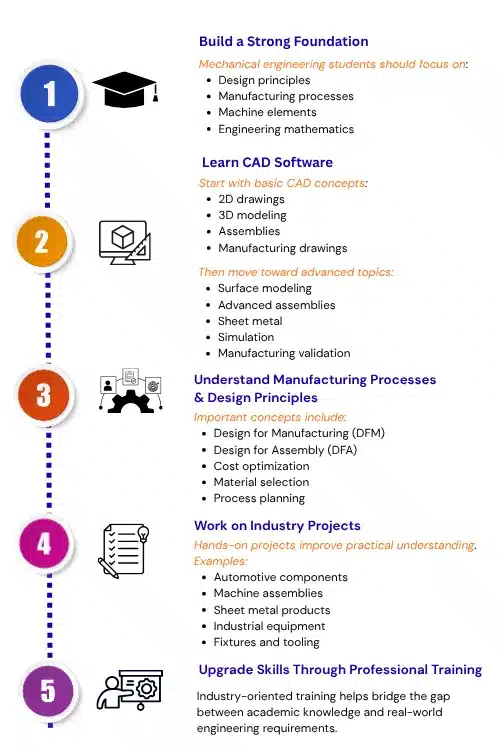
Wondering how to become a Manufacturing Design Engineer? Start by building a strong engineering foundation, learning industry-standard CAD software, understanding manufacturing processes and DFM principles, gaining hands-on project experience, and earning relevant certifications. Following a structured learning path can help prepare you for manufacturing design roles across industries.

Why Is Manufacturing Design Important? Infographic showing the key benefits of manufacturing design, including reduced costs, improved product quality, faster product development, better collaboration, and digital manufacturing.

Top Manufacturing Design Courses

The top manufacturing design courses help build essential skills in CAD software, engineering fundamentals, manufacturing processes, and product development, preparing learners for real-world manufacturing design careers. Here is the list of top manufacturing design courses:
1. Manufacturing Design Fundamentals,
2. Siemens NX Manufacturing Design Course
3. CATIA V5 Manufacturing Design Course

Let’s explore these courses in detail.

Manufacturing Design Fundamentals

 Suitable for beginners. 

Topics include: 

🔺Manufacturing concepts  

🔺Engineering drawings  

🔺Basic CAD modeling  

🔺Product development process  

🔺Manufacturing workflows  

Manufacturing Design Fundamentals course covering engineering drawings, CAD modeling, product development, and manufacturing workflows.

Explore our dedicated course for a more in-depth understanding and practical learning experience.

Siemens NX Manufacturing Design Course

Siemens NX software is widely used in automotive, aerospace, and industrial manufacturing industries. 

Manufacturing design training in NX includes: 

NX Basic Courses 

🔺NX user interface  

🔺Sketching  

🔺Part modeling  

🔺Assemblies  

🔺Drafting  

🔺Feature-based modeling 

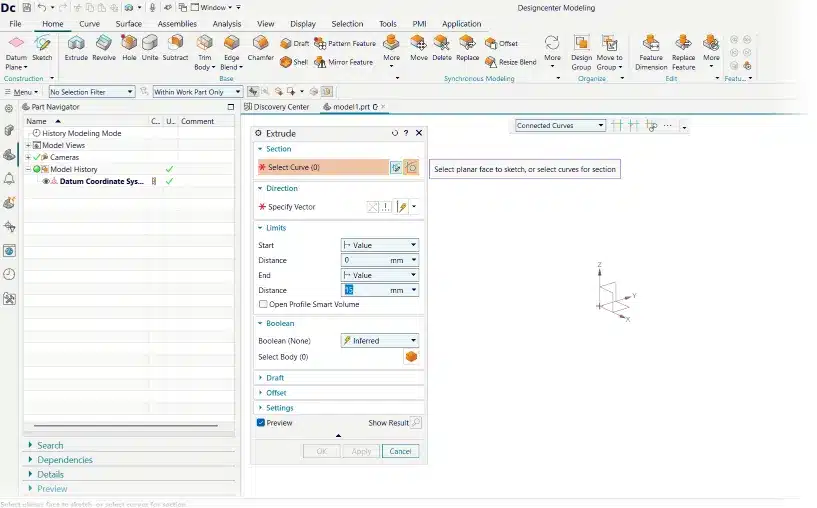
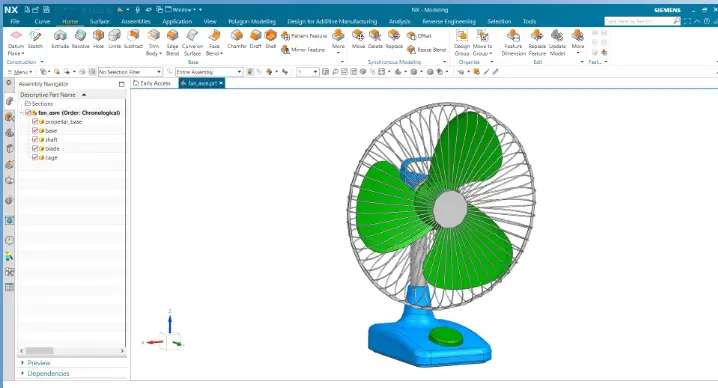
Siemens NX Manufacturing Design course covering NX modeling, assemblies, drafting, and manufacturing workflows.

Explore our dedicated course for a more in-depth understanding and practical learning experience.

CATIA V5 Manufacturing Design Course

CATIA V5 software is extensively used in aerospace, automotive, and industrial product development.

CATIA V5 training includes:  

Basic Courses 

🔺Sketcher  

🔺Part Design  

🔺Assembly Design  

🔺Drafting fundamentals  

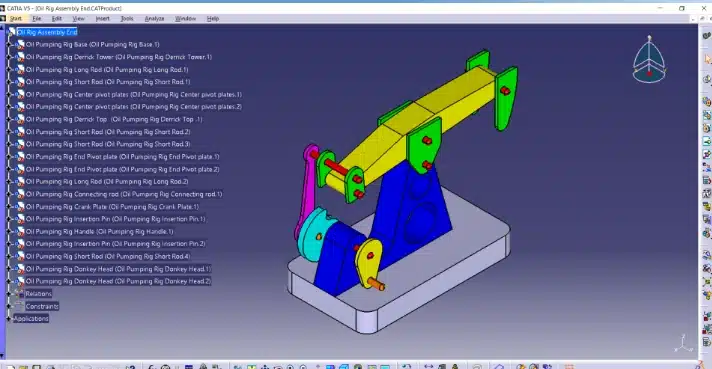
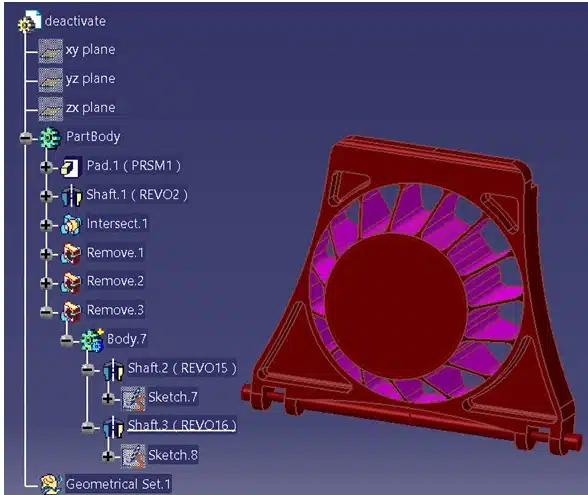
CATIA V5 Manufacturing Design course for 3D modeling, assemblies, drafting, and product development.

Advanced Courses 

🔺Generative Shape Design  

🔺Advanced Part Design  

🔺Sheet Metal Design  

🔺Assembly Management  

🔺Surface modeling  

🔺Product structure management  

CATIA V5 Manufacturing Design course for 3D modeling, assemblies, drafting, and product development.

Explore our dedicated course for a more in-depth understanding and practical learning experience.

Top 5 Job Roles in Manufacturing Design (Salary in USD)

Manufacturing design offers diverse career opportunities across multiple industries. The table below highlights some common job roles and their average annual salaries in the United States. Salary estimates are based on publicly available data from Salary.com, Indeed, PayScale, Velvet Jobs, and Glassdoor.

Job Role Avg. Salary (USD/year)
CAD Designer $65,000 – $80,000
Manufacturing Design Engineer $79,000 – $86,000
Manufacturing Engineer $80,818 – $95,185
Design Engineer $79,029
Design & Manufacturing Engineer (Senior) $104,789 (up to $168,334)

Note: Salary ranges are approximate and compiled from publicly available industry sources. Actual compensation may vary based on experience, qualifications, location, employer, and market conditions.

Interested in how designs are converted into manufactured products? Explore our detailed guide on Computer Aided Manufacturing (CAM).

Career Opportunities and Future Scope

The future of manufacturing design is strongly connected with: 

💠Digital manufacturing  

💠Artificial intelligence  

💠Automation  

💠Robotics  

💠Simulation  

💠Digital twins  

💠Smart factories  


Manufacturing design engineers who combine CAD expertise with manufacturing knowledge will continue to have strong career opportunities. Companies are looking for engineers who can not only create designs but also understand how products move from concept to production.

Conclusion

Before wrapping up, remember that manufacturing design is not just about designing products—it’s about creating solutions that can be manufactured efficiently while meeting quality, performance, and cost requirements. Whether you’re exploring this field as a student or looking to advance your engineering career, developing expertise in CAD software, manufacturing processes, GD&T, and product development can help you stay competitive in today’s manufacturing industry.

At i GET IT by Tata Technologies, we’ve helped over 500,000 learners worldwide build practical design engineering skills through industry-focused training. Backed by decades of engineering expertise, we understand what employers expect from today’s professionals. That’s why this guide combines industry knowledge with practical learning to help you confidently begin your manufacturing design journey.

FAQs

What is manufacturing design in engineering?

Manufacturing design is the process of designing products that are easy to manufacture, assemble, inspect, and maintain. It combines engineering principles, CAD software, manufacturing processes, and Design for Manufacturing (DFM) to create production-ready products while improving quality, cost efficiency, and performance.

Why should you learn manufacturing design?

Learning manufacturing design helps engineers understand how products move from concept to production. It develops practical skills in CAD modeling, engineering drawings, manufacturing processes, and product development, preparing professionals for roles in industries such as automotive, aerospace, industrial equipment, and consumer products.

What skills are required to become a manufacturing design engineer?

A manufacturing design engineer should have knowledge of CAD software, engineering drawings, GD&T, manufacturing processes, material selection, problem-solving, and product development. Communication and teamwork are also important when working with cross-functional engineering teams.

Which are the top manufacturing design courses for aspiring engineers?

The best manufacturing design courses cover engineering fundamentals, CAD software, GD&T, product development, manufacturing processes, and hands-on projects. A structured, industry-aligned learning program helps build practical skills that employers look for.

Which software is commonly used in manufacturing design?

Manufacturing design professionals commonly use software such as Siemens NX, CATIA V5, SOLIDWORKS, Autodesk Inventor, Creo, and AutoCAD. The right software depends on the industry and the product being designed.

How does Design for Manufacturing (DFM) improve product quality?

Design for Manufacturing (DFM) improves product quality by simplifying designs, reducing manufacturing complexity, minimizing production costs, and making products easier to assemble and inspect. It also helps reduce defects and manufacturing waste.

What industries hire manufacturing design engineers?

Manufacturing design engineers work across industries including automotive, aerospace, industrial machinery, consumer electronics, medical devices, heavy equipment, and energy. As smart manufacturing continues to grow, demand for skilled professionals is increasing across multiple sectors.

What is the career scope of manufacturing design?

Manufacturing design offers diverse career opportunities, including CAD Designer, Manufacturing Design Engineer, Design Engineer, Manufacturing Engineer, and Product Development Engineer. Career growth depends on technical skills, industry experience, and proficiency with engineering software.

How do manufacturing design courses prepare you for industry?

Manufacturing design courses combine technical concepts with practical learning through CAD software, engineering projects, manufacturing workflows, and industry-relevant tools. This helps learners develop job-ready skills that can be applied in real engineering environments.

Is manufacturing design a good career choice?

Yes. Manufacturing design is a promising career for engineers interested in product development and manufacturing. As industries adopt automation, Industry 4.0, and digital manufacturing technologies, professionals with manufacturing design skills are expected to remain in demand.

What is the difference between Design for Manufacturing (DFM) and Design for Assembly (DFA)?

Design for Manufacturing (DFM) focuses on simplifying product designs to reduce manufacturing costs, improve production efficiency, and minimize waste. Design for Assembly (DFA), on the other hand, aims to reduce the number of parts and simplify the assembly process. Together, DFM and DFA help engineers create products that are easier and more cost-effective to manufacture and assemble.

How is Industry 4.0 changing manufacturing design?

Industry 4.0 is transforming manufacturing design by integrating digital technologies such as AI, digital twins, IoT, automation, and data analytics into the product development process. These technologies help engineers optimize designs, improve collaboration, reduce production time, and make faster, data-driven decisions throughout the manufacturing lifecycle.

Explore the Manufacturing and Design Certificate Program by Tata Technologies

Take your manufacturing design skills further with a structured, industry-aligned program covering CAD design, GD&T, product development, 3D printing, and CAM to help prepare for engineering roles.

Explore ProgramContact Us
Form Submissionggg
Image description
Fill in your details and Submit to Connect

Submit details and we will get back to you!!!

SME
Image description
Join our Author, Campus & Reseller Program

Submit details and we will get back to you!!!

Styled Form
Image description

Show your Interest

Submit details and we will get back to you!!!

SME
Image description
Join our Author, Campus & Reseller Program

Submit details and we will get back to you!!!

Form Submission
Image description
Tell Us Where to Send the Syllabus?

(Ensure popup is allowed for this site)

Submit details and we will get back to you!!!

Form Submission

Prioritize GD&T before diving into any design software

Invest in your future to
transform your Career path

Become a GD&T Expert
LMS
logo

Autodesk Training Subscription

1010

OR

Verify email

Start your 3 days free trial now


Already have an account? Sign In

By clicking the button above, you accept our terms of use and privacy policy.

LMS
logo

Autodesk Training Subscription

1010

OR

Verify email

(Ensure popup is allowed for this site)

Start your 3 days free trial now

Already have an account? Sign In

By clicking the button above, you accept our terms of use and privacy policy.

LMS
logo

Sign In

Have Organization Sign In?  Use Single Sign On

Don't have an account? Sign Up

OR

logo

Sign Up

Already a user? Sign In

Verify

(Ensure popup is allowed for this site)

OR


Have Organization Sign In?   Use Single Sign On

By Registering you agree to the Terms of Use and Privacy Policy.

logo

Single Sign On

If your company has single sign-on set-up with i GET IT, enter your company's web address to access your unique login page. The format needs to be as such: "domainname.com".

(Ensure popup is allowed for this site)

Not an enterprise user?Sign In
logo

Forgot Password

Enter your email and we'll send you instructions on how to reset your password.

logo

Password Expired!

Password and Authentication

To help keep your account secure, passwords must be updated every 90 days.Your current password has expired, so you'll need to create a new password before continuing.

Avail Offer Form