What is Fluid Mechanics? – Introduction, Laws & Equations

January 7, 2026 2026-01-09 12:04What is Fluid Mechanics? – Introduction, Laws & Equations

What is Fluid Mechanics? – Introduction, Laws & Equations

Fluid mechanics is a subject whose importance engineers often fully realize only when they begin applying it to real-world systems. Whether it is analyzing airflow around a component, understanding pressure losses in pipelines, or ensuring efficient cooling in machines, fluid mechanics concepts appear repeatedly in everyday engineering practice. From my experience as a mechanical engineer, a strong understanding of flow, pressure, and energy transfer plays a direct role in making reliable and efficient design decisions.
Fluid mechanics is a foundational branch of engineering science that deals with the behavior of liquids and gases, both at rest and in motion. It forms the basis for designing and analyzing systems across industries, including aircraft and automobile engineering, pipelines, power generation, biomedical devices, and weather-related applications.
In basic engineering education, the subject is commonly introduced as fluid and mechanics, helping students understand how fluid behavior connects with classical mechanics principles.
In everyday life, its principles govern how water flows through household pipes, how air circulates in ventilation systems, and how fuel is delivered efficiently in engines. For example, when a tap is opened and water flows faster through a narrow outlet, the change in speed and pressure can be explained using basic fluid mechanics principles.
At an industrial scale, fluid mechanics enables the safe design of dams, efficient machines, optimized chemical processes, and life-saving medical devices. For instance, in dam design, fluid mechanics helps engineers calculate the pressure exerted by large volumes of water on walls, ensuring structural safety and preventing failure. This blog presents a structured overview of the fundamental concepts of fluid mechanics, its classifications, governing principles, and practical applications, along with its growing importance in simulation-driven and digital engineering environments.
Table of Contents
What Is a Fluid?
A fluid is any substance that can flow and change its shape continuously when a force is applied. Unlike solids, fluids do not have a fixed shape and always take the shape of the container they are in. In engineering, liquids (such as water and oil) and gases (such as air and steam) are both classified as fluids.
The key characteristic of a fluid is that it cannot resist shear stress without ongoing deformation. This means that even a small force can cause a fluid to keep moving or flowing as long as the force is applied. This flowing nature of fluids is what makes their behavior unique and important in engineering analysis.
What Is Fluid Mechanics in Engineering?
Fluid mechanics is a branch of physics and engineering that focuses on the study of fluids—liquids and gases—and the forces acting upon them. Unlike solids, fluids cannot resist shear stress indefinitely. When subjected to shear forces, they continue to deform as long as the force is applied, resulting in continuous motion or flow.
This defining characteristic makes fluids uniquely challenging to analyse. Their motion depends not only on applied forces but also on intrinsic properties such as viscosity, density, and compressibility, as well as external factors like boundary conditions, surface roughness, and flow geometry.
At a fundamental level, fluid mechanics seeks to answer key questions such as:
- How do fluids move under different physical and thermal conditions?
- What forces initiate, sustain, or resist fluid motion?
- How do fluids interact with solid surfaces and structures?
- How can fluid behaviour be predicted, controlled, and optimized in engineering systems?
To address these questions, fluid mechanics integrates mathematical modelling, laboratory experimentation, empirical correlations, and modern computational techniques, enabling engineers to connect theoretical principles with real-world behaviour.
✅ You May Also Like This What is Engineering Mechanics? – Introduction 101
What Are the Main Branches of Fluid Mechanics?
Fluid mechanics is broadly categorized into two primary branches, each addressing a distinct aspect of fluid behaviour.
1. Fluid Statics
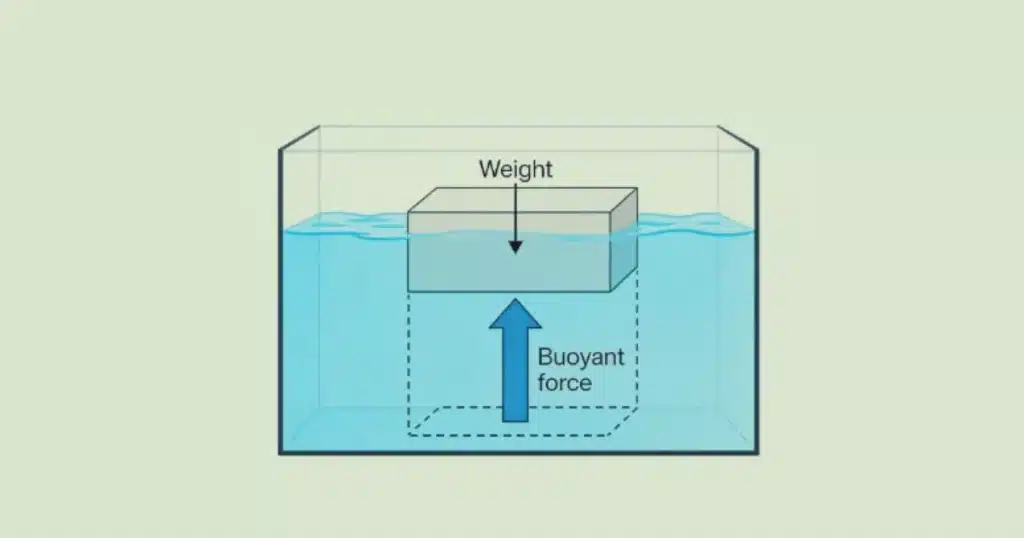
Fluid statics deals with fluids that are at rest. Since there is no relative motion between fluid layers, shear stresses are absent, and pressure acts normal to any surface in contact with the fluid.
Key areas of study include:
- Variation of pressure with depth
- Hydrostatic forces acting on submerged and curved surfaces
- Buoyancy and flotation principles
- Stability of floating and submerged bodies
Fluid statics finds extensive applications in the design of water tanks, dams, hydraulic jacks, underwater pipelines, storage vessels, and marine structures. Accurate hydrostatic analysis is essential to ensure structural safety, load balancing, and operational reliability in civil and mechanical engineering systems.
2. Fluid Dynamics
Fluid dynamics focuses on fluids in motion and is inherently more complex due to the involvement of velocity, acceleration, viscous effects, and energy losses.
Important topics include:
- Fluid kinematics, which describes motion without considering forces
Fluid kinetics, which examines forces responsible for motion
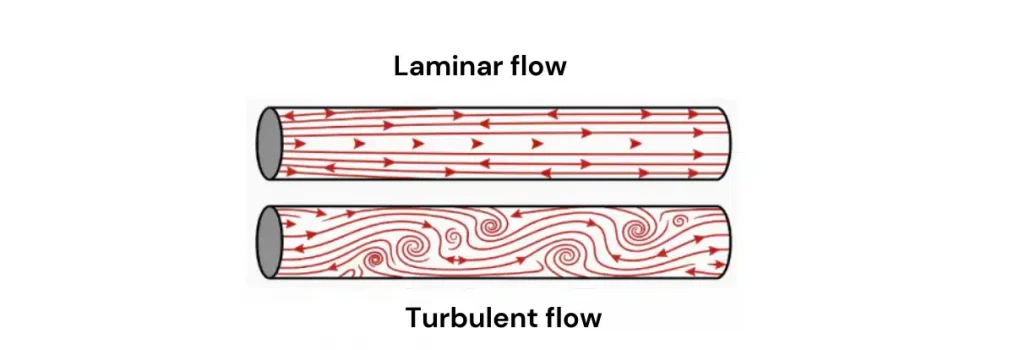
- Laminar and turbulent flow behavior
- Internal and external flows
- Compressible and incompressible flows
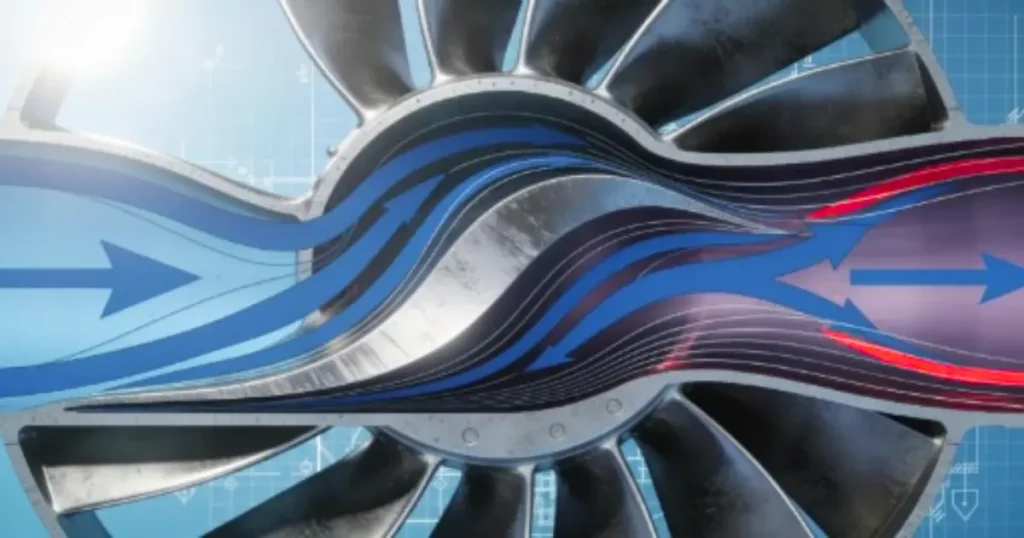
Fluid dynamics is central to the analysis and design of aircraft, pumps, turbines, compressors, heat exchangers, ventilation systems, and biological flow systems. A strong grasp of fluid and dynamics allows engineers to optimize system performance, reduce pressure losses, and improve energy efficiency.
Key Properties of Fluids in Fluid Mechanics
The behaviour of any fluid is governed by a set of fundamental physical properties that determine how it responds to forces and environmental conditions.
- Density (ρ): Mass per unit volume, influencing inertia, pressure variation, and buoyant forces
- Viscosity (μ): Measure of a fluid’s resistance to flow, directly affecting frictional losses and energy dissipation
- Surface Tension: Force acting at liquid interfaces due to molecular attraction, significant in microfluidics and droplet formation
- Specific Gravity: Ratio of a fluid’s density to that of water, useful in practical engineering comparisons
- Compressibility: Ability of a fluid to change volume under applied pressure, particularly important in gas dynamics
A clear understanding of these properties is essential for selecting appropriate working fluids, predicting flow behaviour, and designing efficient fluid-based systems.
Fundamental Laws and Governing Equations
Fluid mechanics relies on several foundational principles that mathematically describe fluid behaviour and form the basis of engineering analysis.
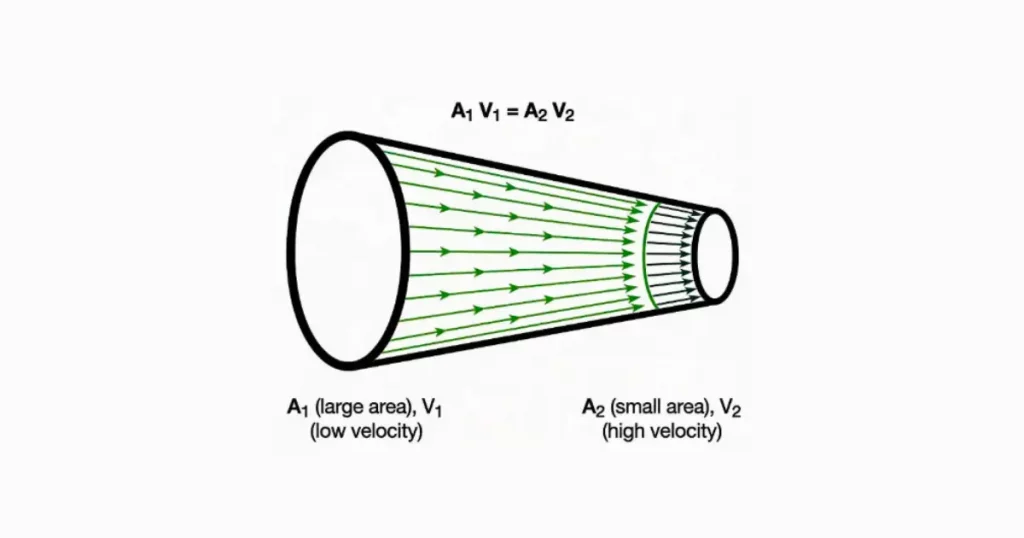
Continuity Equation
Derived from the conservation of mass, the continuity equation states that mass flow rate remains constant within a closed system. It is extensively used in analysing pipe networks, nozzles, diffusers, and flow-measurement devices.
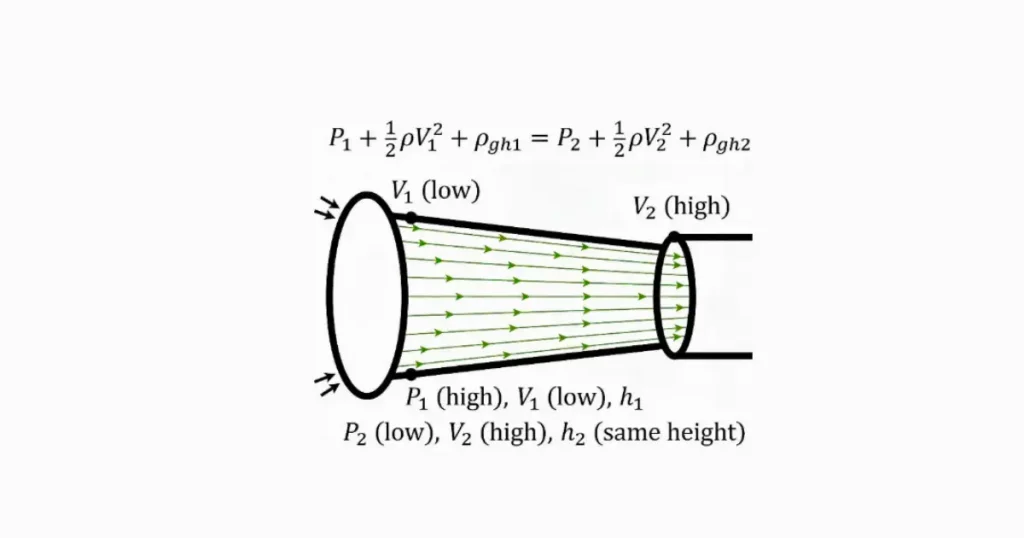
Bernoulli’s Equation
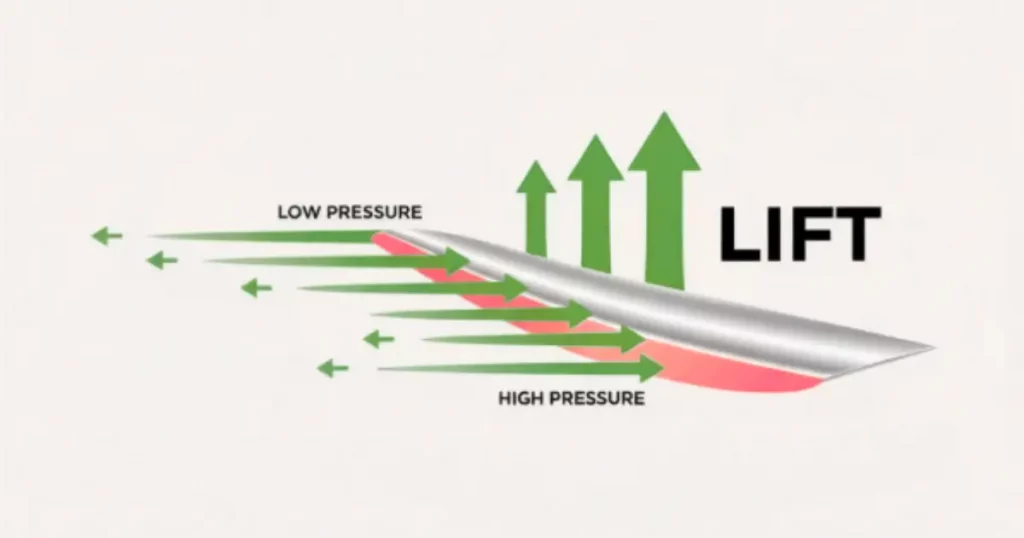
Based on the conservation of energy, Bernoulli’s equation relates pressure, velocity, and elevation in a flowing fluid. It explains phenomena such as pressure drop, flow acceleration, siphon action, and lift generation on aircraft wings.
Newton’s Laws of Motion
Newton’s laws form the basis for momentum analysis in fluids and are essential for studying forces in jet propulsion, pipe bends, turbine blades, and reaction forces in flow systems.
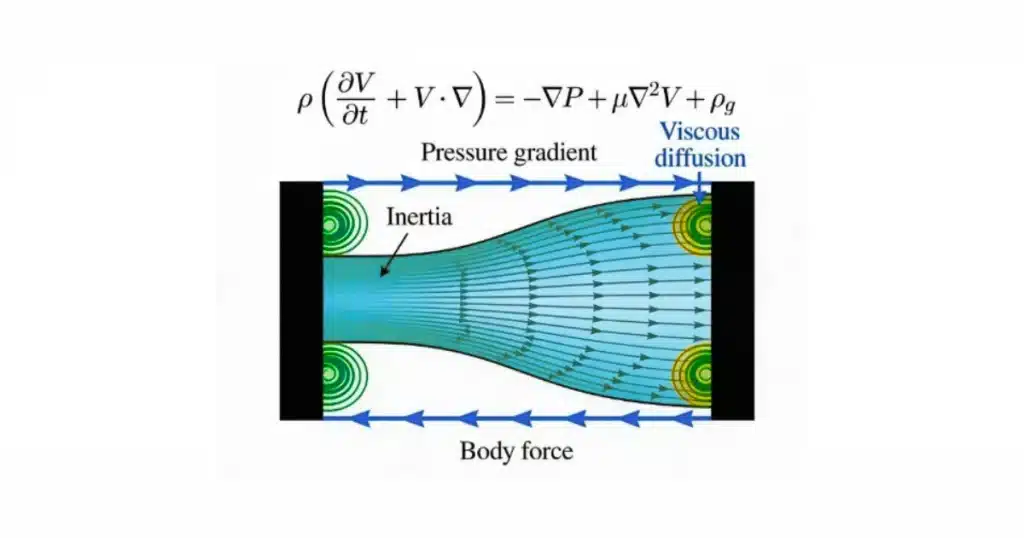
Navier–Stokes Equations
The Navier–Stokes equations provide the most complete mathematical description of viscous fluid motion. While exact analytical solutions are limited, these equations serve as the foundation for numerical simulation and CFD analysis.
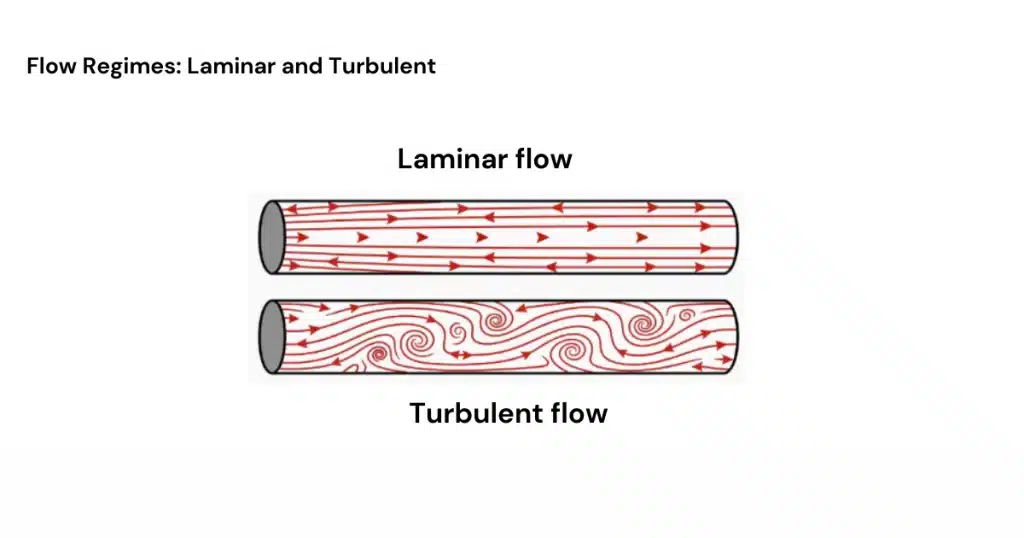
Flow Regimes: Laminar and Turbulent
One of the most critical concepts in fluid mechanics is the classification of flow regimes.
- Laminar Flow: Characterized by smooth, orderly motion with fluid layers moving in parallel paths
- Turbulent Flow: Marked by chaotic fluctuations, eddies, and enhanced mixing
The Reynolds number, a dimensionless parameter, is used to predict the transition between laminar and turbulent flow. Correct identification of flow regime is vital for accurate estimation of pressure losses, heat transfer rates, noise generation, and overall system performance.
Applications Across Engineering Disciplines
Fluid mechanics is inherently interdisciplinary and serves as a foundation for multiple engineering domains.
Mechanical Engineering
Applications include turbomachinery, automotive aerodynamics, internal combustion engines, lubrication systems, and thermal management. Efficient mechanical design depends heavily on controlling fluid losses and maximizing useful energy conversion.
Civil Engineering
Civil engineers apply fluid mechanics to water distribution networks, sewage systems, river and canal flows, flood control structures, and dam design. Hydraulics remains a core subject in civil engineering education and professional practice.
Aerospace Engineering
Aerodynamics, a direct application of fluid mechanics, governs lift, drag, stability, and propulsion. Aircraft, helicopters, unmanned aerial vehicles, and spacecraft rely extensively on fluid mechanics for safe and efficient operation.
Chemical and Process Engineering
Fluid mechanics plays a vital role in reactor design, mixing operations, pipeline transport, and multiphase flows. Proper flow management improves reaction efficiency, safety, and product consistency.
Biomedical Engineering
In healthcare, fluid mechanics helps analyse blood circulation, airflow in the respiratory system, and the performance of medical devices such as stents, heart valves, ventilators, and inhalers.
📌Related Engineering Fundamentals What is Computer Aided Manufacturing (CAM)? [Detailed Guide]
Computational Fluid Dynamics (CFD)
The rapid growth of computing power has transformed fluid mechanics through Computational Fluid Dynamics (CFD). CFD employs numerical techniques to discretize and solve governing equations over complex geometries and operating conditions.
Key advantages of CFD include:
- Detailed visualization of velocity, pressure, and temperature fields
- Reduced dependence on costly physical experiments
- Faster design iterations and optimization
- Ability to analyse extreme, hazardous, or inaccessible conditions
CFD tools such as ANSYS Fluent, OpenFOAM, and STAR-CCM+ are widely used in industry and academia, making CFD proficiency a valuable and market-relevant skill for engineers.
Watch: Apply Engineering Concepts Through Simulation
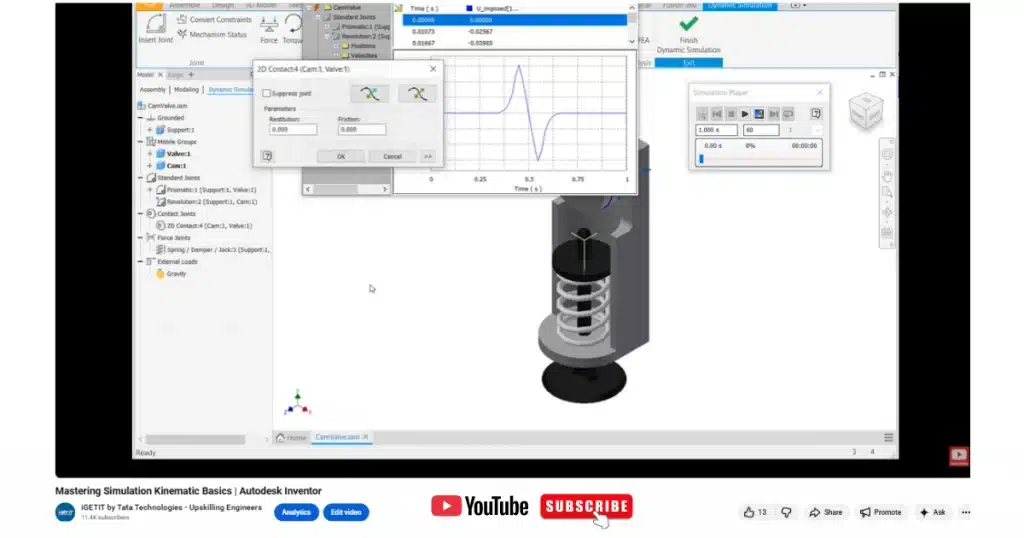
Understanding engineering fundamentals like motion, flow behaviour, and system response becomes much clearer when you see them applied in simulations.
In this video, “Mastering Simulation Kinematic Basics | Autodesk Inventor”, we walk through how engineers analyse motion and system behaviour using simulation tools—an essential skill for anyone moving towards CFD, CAE, and simulation-driven engineering.
👉 Watch the full video here:
Mastering Simulation Kinematic Basics | Autodesk Inventor
Role of Fluid Mechanics in Sustainable Engineering
Fluid mechanics plays a crucial role in sustainable and green engineering initiatives. It supports the design and optimization of:
- Energy-efficient HVAC and cooling systems
- Wind turbines and hydroelectric power plants
- Optimized water distribution and irrigation networks
- Pollution control devices and wastewater treatment plants
By improving flow efficiency and reducing energy losses, fluid mechanics directly contributes to sustainability goals, energy conservation, and environmental protection.
Importance of Fluid Mechanics Education
Many students initially perceive fluid mechanics, or fluid and mechanics as it is often taught in early engineering courses, as challenging due to its mathematical rigor and abstract nature.
- Understand advanced engineering systems
- Transition smoothly into CFD and simulation-based roles
- Solve complex, multidisciplinary problems
- Develop physical intuition for real-world fluid behaviour
Modern EdTech platforms are transforming fluid mechanics education by integrating simulations, animations, virtual laboratories, and industry-aligned case studies, making learning more engaging and conceptually clear.
Career Pathways Enabled by Fluid Mechanics
Proficiency in fluid mechanics opens opportunities in high-demand roles such as:
- CFD Engineer
- Aerodynamics Engineer
- Hydraulic Design Engineer
- HVAC Engineer
- Process Engineer
- Research and Development Scientist
Industries including aerospace, automotive, energy, infrastructure, marine, and biomedical engineering actively seek professionals with strong fluid mechanics expertise.
Conclusion
Fluid mechanics is far more than a theoretical discipline—it is a foundational pillar of modern engineering and technological advancement. From everyday systems like water supply and ventilation to advanced aerospace and medical technologies, fluid mechanics influences nearly every aspect of modern life.
For students, mastering fluid mechanics builds a robust engineering foundation. For professionals, it enables innovation, efficiency, and informed decision-making. As industries increasingly adopt simulation-driven design and digital engineering practices, the importance of fluid and mechanics continues to grow.
By combining sound theoretical knowledge with practical tools such as CFD, engineers can harness fluid behaviour to design safer, smarter, and more sustainable engineering solutions for the future.
Fluid mechanics is the study of how liquids and gases behave when they are at rest or in motion. It explains how fluids flow, apply pressure, and interact with surfaces in everyday life and engineering systems.
Yes, air is considered a fluid because it can flow and change shape under applied forces. In fluid mechanics, both liquids (like water) and gases (like air) are classified as fluids.
Fluid mechanics is visible in many daily activities, such as water flowing from taps, air circulation from fans and air conditioners, fuel movement in vehicles, blood flow in the human body, and wind movement in the atmosphere.
Fluid mechanics is important because many engineering systems involve moving liquids or gases. It helps engineers design safe structures, efficient machines, reliable pipelines, effective cooling systems, and energy-efficient transportation.
The two main branches of fluid mechanics are fluid statics, which studies fluids at rest, and fluid dynamics, which studies fluids in motion.
In dam and pipeline design, fluid mechanics helps engineers calculate pressure forces, flow rates, and energy losses. This ensures structural safety, prevents failures, and improves efficiency.
No. While fluid mechanics is a core engineering subject, its principles are also used in medicine, environmental studies, meteorology, and everyday technologies such as ventilation, plumbing, and transportation.
Fluid mechanics forms the foundation of simulation tools like Computational Fluid Dynamics (CFD), which are used to analyze and visualize fluid flow digitally before building real systems.
Fluid dynamics is a branch of fluid mechanics that studies the behavior of fluids (liquids and gases) when they are in motion. It focuses on how fluids flow, how velocity and pressure change, and how forces act on moving fluids in systems such as pipes, aircraft, pumps, turbines, and natural flows.
Explore CAE Analyst Certificate Program by Tata Technologies
iGETIT by Tata Technologies offers an industry-aligned CAE Analyst Certificate Program focused on building strong foundations in CAE, simulation, and practical engineering analysis.
Explore CAE Analyst Program Contact UsPrateek Potnis
Related Posts
What Is AutoCAD Software? Uses, Features & Practical Examples
Independent Front Wheel Suspension – Types, Benefits & Working
What is PLM? – Product Lifecycle Management [Detailed Guide]
Lead-Acid vs. Lithium-Ion Batteries: Key Differences & Best Uses
Top AutoCAD 3D Commands & Shortcuts with Examples
Find
Categories
Latest Posts
What is Fluid Mechanics? – Introduction, Laws & Equations
January 7, 2026What Is AutoCAD Software? Uses, Features & Practical Examples
December 18, 2025Independent Front Wheel Suspension – Types, Benefits & Working
November 10, 2025Popular Tags